A Simple Guide to the Tile Industry’s V1–V4 Shade Variation Ratings
The shade variation classification system helps homeowners, designers, and installers understand the natural differences in color and texture found in ceramic and porcelain tile. The V1–V4 ratings provide a clear, standardized way to communicate the expected appearance of a tile.
The system employs a grading scale, typically denoted as V-1, V-2, V-3, and V-4, each representing a specific level of intentional shade variation:
- V-1 (Uniform Appearance): V-1 tiles have a uniform appearance with little to no variation between pieces. They are highly consistent in both color and texture, with each tile produced using the same glaze application and body texture.
- V-2 (Slight Variation): V-2 signifies a slight variation, where noticeable differences in texture and/or patterns of similar colors may exist. While the overall appearance remains cohesive, there is a subtle acknowledgment of diversity between individual tiles.
- V-3 (Moderate Variation): V-3 tiles have moderate variation in color and appearance. While the colors in one tile generally reflect those found in others, the amount and placement of each color can vary significantly. This creates a more natural, dynamic look.
- V-4 (Random or Dramatic Variation): V-4 represents the most random or dramatic variation. Tiles in this category can differ significantly in color and pattern from tile to tile. this results in a visually dynamic and unique installation.
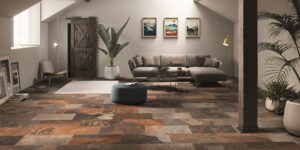
Edimax More Sunset is an example of a V-4 shade variation.
Understanding shade variation helps you choose tile that matches your design goals. Whether you want a uniform appearance or a more natural, varied look, the V-rating provides a clear expectation of how the finished installation will appear.
Contact us at Conestoga Tile for more guidance on shade variation and other industry standards.