Porcelain Panels and Gauged Porcelain Tile: A complete Guide
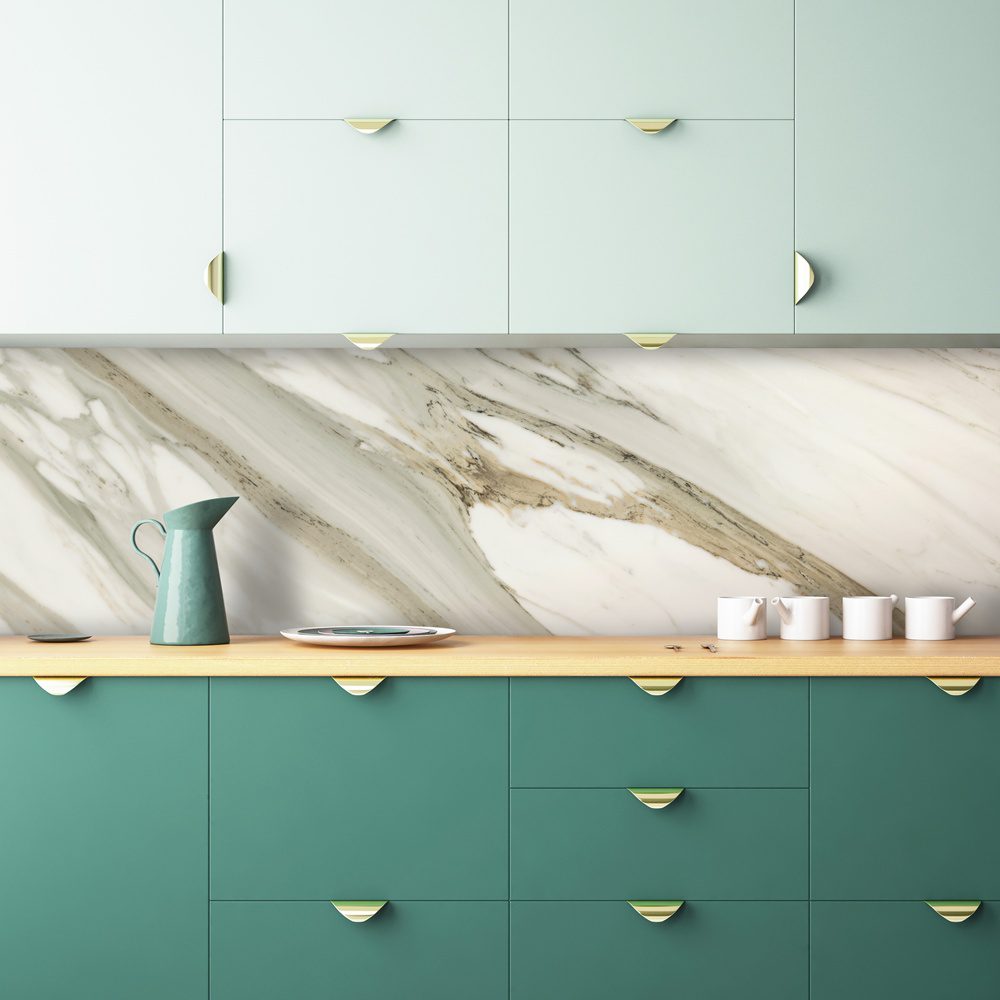
Porcelain panels, often referred to as gauged porcelain tile panels or 6mm porcelain panels, combine the durability and design possibilities of porcelain with an exceptionally large format and relatively thin profile. Available in sizes that can cover substantial portions of a wall with a single piece, porcelain panels allow designers to create expansive surfaces with dramatically fewer grout joints than conventional tile.
While porcelain panels are most commonly associated with wall applications, many products can also be used on interior floors when properly specified and installed. Their relatively thin profile can also make them an attractive option for certain exterior wall applications.


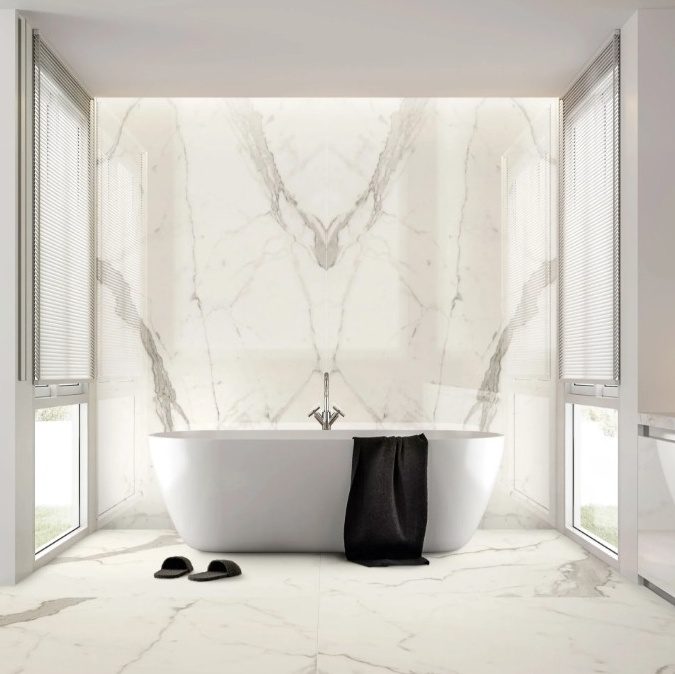
Porcelain panels are available in designs inspired by marble, natural stone, concrete, metal and other materials, making them suitable for everything from large-format shower panels and bathroom walls to fireplace surrounds, feature walls, commercial spaces and exterior architectural surfaces.
Understanding the differences between 6mm porcelain panels, conventional large-format porcelain tile and thicker 12mm porcelain slabs is important when selecting the right product for a project.
What Is a Gauged Porcelain Tile Panel?
Gauged porcelain tile panels are large-format porcelain products manufactured in relatively thin thicknesses compared with traditional porcelain slabs.
A common panel thickness is approximately 6mm, although products are available in other thicknesses depending on the manufacturer and intended application.
Their defining characteristic is the combination of a very large surface area with a relatively thin profile. Individual panels can reach approximately 4 feet wide and 9 feet or more in length, allowing a single piece of porcelain to cover an area that would require numerous pieces of conventional tile.
This creates some important design and performance opportunities, but it also requires specialized handling, cutting and installation techniques.
Where Can Porcelain Panels Be Used?
Depending on the specific product and manufacturer recommendations, gauged porcelain panels can be used for a wide variety of residential and commercial applications, including:
- Shower and bathroom walls
- Kitchen backsplashes
- Fireplace surrounds
- Feature walls
- Interior floors
- Commercial walls and floors
- Exterior vertical surfaces
- Outdoor kitchen walls and backsplashes
- Other architectural wall applications
The appropriate panel thickness, installation system and surface characteristics should always be selected for the intended application.
Why Use Porcelain Panels on Walls?
Walls are where the advantages of large porcelain panels become particularly apparent.
Fewer Grout Joints
One of the most obvious benefits is the ability to cover a large surface with very few grout joints.
A shower wall that might otherwise require numerous individual tiles can potentially be covered with one or only a few large porcelain panels.
Fewer grout joints create a cleaner, more continuous appearance while also reducing the amount of grout that needs to be cleaned and maintained.
Large-Scale Design
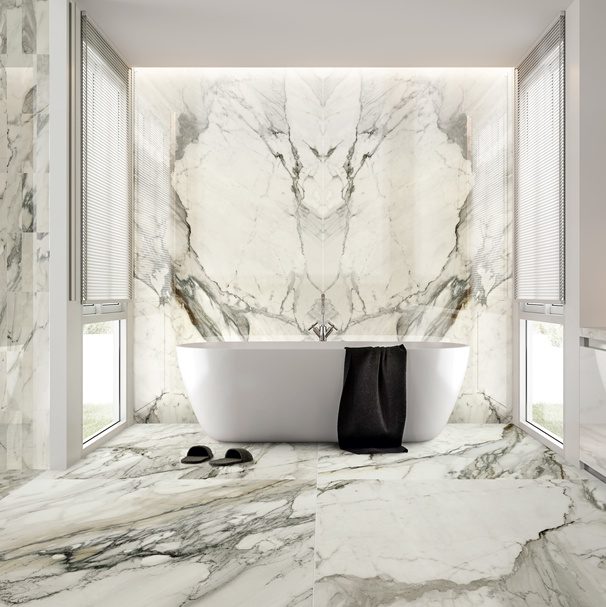
Large porcelain panels allow stone, marble, concrete and other designs to be displayed across an expansive surface without being interrupted every few inches by grout joints.
This can be particularly dramatic with marble-inspired products where veining and movement become an important part of the overall design.
Thin Profile
At approximately 6mm, porcelain panels provide a relatively thin finished surface despite their large dimensions.
This can be particularly useful for large wall applications where the additional thickness, weight and fabrication requirements of a 12mm porcelain slab may not be necessary.
Durable, Easy-to-Maintain Surface
Porcelain provides extremely low water absorption and excellent resistance to stains, moisture, fading and many household chemicals.
It does not require periodic sealing and can provide a long-lasting, relatively easy-to-maintain wall surface.

Porcelain Shower Panels for Shower Walls
Showers are one of the applications where large-format porcelain panels can provide both practical and aesthetic advantages.
Large-format porcelain shower panels are an increasingly popular alternative to covering shower walls with conventional tile. Because a single porcelain panel can cover a substantial portion of a shower wall, these large-format panels can dramatically reduce the number of grout joints while creating a clean, continuous surface.
Porcelain’s extremely low water absorption, stain resistance and easy maintenance make it particularly well suited for wet environments when installed as part of a properly designed shower system.
The porcelain itself, however, is only the finished surface. Proper waterproofing behind the panel remains essential to the performance of the complete shower assembly.

Porcelain Panels for Fireplace Surrounds and Feature Walls
The scale of porcelain panels makes them particularly effective for architectural feature walls and fireplace surrounds.
A marble-inspired porcelain panel, for example, can provide dramatic veining across a large fireplace wall without the maintenance requirements associated with some natural stones. Concrete, metal and stone-inspired designs can create very different architectural effects while maintaining the performance characteristics of porcelain.
Porcelain’s heat and fire resistance can also make it an attractive finish around fireplaces when the complete assembly and installation meet the requirements of the fireplace manufacturer and applicable building standards.
As we’ll discuss below, fireplaces are also a good example of an application where 12mm porcelain slabs may sometimes offer an advantage over thinner 6mm panels because of the exposed edges, outside corners and miters that can be incorporated into the design.
Can Porcelain Panels Be Installed on Floors?
Although large porcelain panels are often thought of as wall products, many gauged porcelain tile panels are also suitable for interior floor installations.
One of the most important requirements for a successful floor installation is substrate flatness.
Because a porcelain panel can extend across such a large area, even relatively small variations in the floor can create installation problems. High and low areas can make it difficult to properly support the panel and maintain a consistent finished surface, potentially contributing to lippage—a height difference between the edges of adjoining tiles.
The larger the tile, the less ability the installation has to accommodate these variations. A small tile can follow minor changes in a floor more easily; a porcelain panel several feet long cannot.
The substrate therefore needs to be exceptionally flat, and additional floor preparation may be necessary before installation begins.
Proper mortar coverage and support beneath the panel are also critical. Large panels require specialized installation techniques and installers familiar with gauged porcelain tile panel installations.
What is the Difference Between 6mm Porcelain Panels and 12mm Porcelain Slabs?
Although 6mm porcelain panels and 12mm porcelain slabs may look similar, they can serve different purposes and follow very different paths from material selection through installation.
Understanding those differences can help determine which material is most appropriate—and most cost-effective—for a particular project.
6mm Porcelain Panels
6mm gauged porcelain panels are primarily tile products.
They are particularly well suited for large, relatively flat wall coverings and, when approved by the manufacturer and properly installed, certain interior floor applications.
The panels are generally delivered to the project and cut, prepared and installed by an experienced tile installer at the jobsite.
Specialized tools and techniques are required to move, cut and install the panels, but the process remains within the tile-installation trade.
For straightforward wall installations, this can provide an important cost advantage. A 6mm panel uses less material than a 12mm slab and generally avoids the separate stone-fabrication process.
When an edge of a 6mm panel will remain exposed, however, a finishing profile—typically metal or PVC—may be needed to protect the edge and provide a finished appearance.
12mm Porcelain Slabs
12mm porcelain slabs are commonly associated with countertops and vanity tops, but their additional thickness can also provide significant advantages for certain wall applications.
Rather than being prepared by the tile installer at the jobsite, 12mm slabs are generally cut and finished in a stone fabrication shop, where specialized equipment can create polished edges, miters, openings and other architectural details.
The finished pieces are then transported to the project for installation.
This additional fabrication adds cost, but it also makes details possible that can be difficult to achieve as cleanly with a 6mm panel.
Exposed Edges and Miters Can Determine Which Thickness Is Best
One of the most important considerations when choosing between 6mm and 12mm porcelain is what happens at the edges and corners of the installation.
Consider a large shower wall. If the porcelain terminates at an outside edge, that edge becomes visible. With a 6mm porcelain panel, the exposed edge will typically require a metal or PVC finishing profile to create a clean transition.
A 12mm porcelain slab provides another option. Its greater thickness allows the exposed edge to be professionally finished and polished, creating a clean appearance without requiring a separate profile.
Fireplace surrounds provide another good example. The opening around the firebox can leave multiple porcelain edges exposed. A fabricated 12mm slab allows these edges to be cut and finished in the shop for a more refined architectural appearance.
The additional thickness is also advantageous when a fireplace or feature wall projects out from the wall. Mitered outside corners can be fabricated so the porcelain wraps from the face onto the return, creating the appearance of a continuous porcelain surface.
In these situations, the additional material and fabrication cost of 12mm porcelain may be justified by the superior edge and corner detailing it makes possible.
Why the Difference in Fabrication Matters
The distinction between tile installation and stone fabrication can have a significant effect on project cost, appearance and coordination.
A 6mm porcelain panel used on a straightforward wall can often be measured, cut and prepared at the project by an experienced tile installation team. This can make it an efficient solution for large wall areas without complicated edge conditions.
A 12mm slab typically requires a separate fabrication process involving detailed measurements or templating, transportation, specialized shop equipment and professional fabrication before the finished pieces arrive at the project.
That additional process increases cost, but it provides capabilities that may be difficult to achieve with a thin panel—particularly polished exposed edges, precise miters, outside corners, returns and finished openings.
For this reason, the choice should not simply be based on whether the porcelain is going on a wall. The design and architectural details of the wall should help determine which material makes the most sense.
What is the Difference Between Porcelain Panels and Conventional Large-Format Porcelain Tile?
The term large-format porcelain tile covers a broad category.
A 24″ x 48″ porcelain tile, for example, is generally considered large format, but it is very different from a porcelain panel measuring approximately 4 feet by 9 feet.
Conventional large-format porcelain tile can be an excellent choice for both floors and walls and is available in numerous sizes and thicknesses.
Porcelain panels take the large-format concept considerably further. Their primary advantage is scale. Fewer individual pieces allow designers to create surfaces with dramatically fewer grout joints and greater visual continuity.
The best choice depends on the size of the area, desired appearance, installation conditions, budget and experience of the installer.
Handling and Installing Porcelain Panels Requires Experience
The thinness of a porcelain panel should not be confused with ease of installation.
The combination of very large size and relatively thin material requires specialized handling techniques. Installers may use large frames, suction cups, cutting systems and other equipment specifically designed for gauged porcelain panels.
Proper mortar selection, coverage, substrate preparation, movement accommodation and handling procedures are all important.
An installer experienced with conventional 12″ x 24″ or 24″ x 48″ porcelain tile should not automatically be assumed to have experience installing panels approaching 4 feet by 9 feet.
When considering a porcelain panel installation, ask specifically about the installer’s experience with gauged porcelain tile panels.
What Are the Disadvantages of Porcelain Panels?
Porcelain panels provide significant design and performance advantages, but they are not appropriate for every project.
Specialized installation is required. Their large dimensions require installers with appropriate training, tools and handling experience. Not all tile installers offer porcelain panel installation, and those who specialize in this work may charge a premium.
Substrate preparation is critical. Walls and particularly floors must meet demanding flatness requirements for a successful installation.
Handling requires care. Large, thin panels need to be properly transported, moved and supported before they are installed.
Their size can limit where they can be installed. Tight corridors, narrow passageways, doorways or stairwells may make it difficult—or sometimes impossible—to maneuver a large panel to its intended location. Access should be considered before selecting the panel size.
Floor applications may require additional preparation. Achieving the required substrate flatness can add cost to a floor project.
Not every product is appropriate for every application. A panel suitable for an interior wall should not automatically be assumed suitable for floors or exterior installations.
These considerations make proper product selection and installation planning particularly important.
Choosing Between a 6mm Porcelain Panel and a 12mm Porcelain Slab
The decision should begin with both the application and the architectural details.
For a kitchen countertop or vanity top, a 12mm or other manufacturer-approved countertop slab is generally the appropriate product.
For a large, relatively flat shower wall, feature wall, backsplash or exterior vertical surface, a 6mm porcelain panel may provide the desired appearance at a lower material and installation cost.
For a shower, fireplace or feature wall with exposed edges, outside corners, mitered returns or dimensional projections, 12mm porcelain may provide significant advantages because the material can be professionally fabricated, polished and mitered to create finished architectural details.
For an interior floor, a gauged porcelain panel may be appropriate when the product is approved for floor use and the substrate can be prepared to the required flatness.
Rather than assuming thinner porcelain is less expensive and therefore better—or that thicker porcelain is automatically superior—the goal should be to select the product that best accommodates the surface, edges, corners, fabrication requirements and desired finished appearance.
Porcelain Panels as Part of Outdoor Living
Large porcelain panels provide another way to extend porcelain beyond patios and countertops.
An outdoor living space might combine 2cm porcelain pavers on the patio, a 12mm porcelain slab on an outdoor kitchen countertop or wrapped around a fireplace, and 6mm porcelain panels on a backsplash or architectural feature wall.
Each product can be used where its thickness and fabrication characteristics make the most sense while allowing the different surfaces to coordinate visually.
Explore our Outdoor Living with Porcelain Tile Guide for more ideas on incorporating porcelain into complete outdoor environments.


Frequently Asked Questions about Porcelain Tile
Are the porcelain panels good for shower walls?
Yes. Porcelain panels can be an excellent choice for shower walls when the product is approved for the application and properly installed. Their large size allows a shower to be finished with substantially fewer grout joints than conventional tile. Porcelain also has extremely low water absorption and is resistant to staining and many household chemicals. As with any tiled shower, however, the porcelain surface itself is not the waterproofing system; proper waterproofing must be installed behind it.
What are porcelain shower panels?
Porcelain shower panels are the large-format porcelain surfaces used to cover shower walls. Gauged porcelain panels can measure approximately four feet wide by nine feet or more in length, allowing one or only a few panels to cover an entire shower wall. They provide the durability and design possibilities of porcelain tile while creating a more continuous appearance with fewer grout joints.
See 6mm Porcelain Panels in Person
The scale and appearance of gauged porcelain panels can be difficult to understand from a small sample.
Seeing larger displays makes it much easier to appreciate how stone veining, concrete textures and other designs appear across an expansive surface with very few grout joints.
Conestoga Tile offers large-format porcelain products for walls, floors, showers, fireplaces and appropriate exterior applications. Our showroom teams can help homeowners, designers, architects, remodelers and contractors understand the differences between conventional large-format tile, 6mm porcelain panels and thicker porcelain slabs.
We can also help you consider which type of porcelain makes the most sense for the application and connect you with experienced professionals familiar with these specialized products.
Whether you’re considering porcelain panels for a shower, feature wall, floor, fireplace or exterior application, visit a Conestoga Tile showroom or contact us for help exploring the possibilities of large-format porcelain.