Porcelain Countertops: A Complete Guide
Porcelain countertops combine exceptional durability with the design possibilities of large-format porcelain slabs. Available in designs inspired by marble, natural stone, concrete and other materials, porcelain provides homeowners and designers with a countertop surface that can deliver both high performance and sophisticated design.
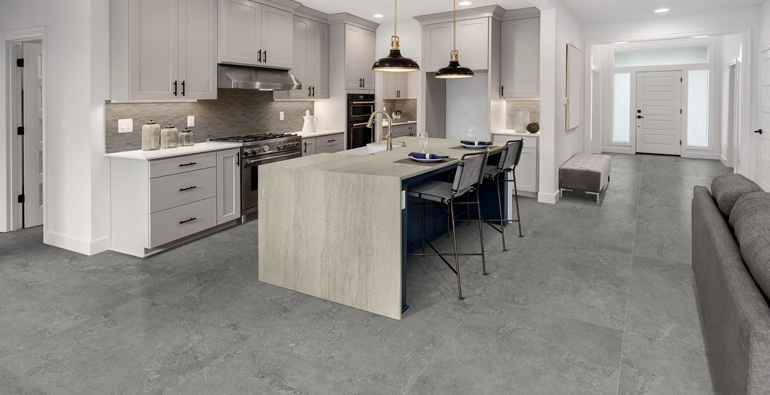
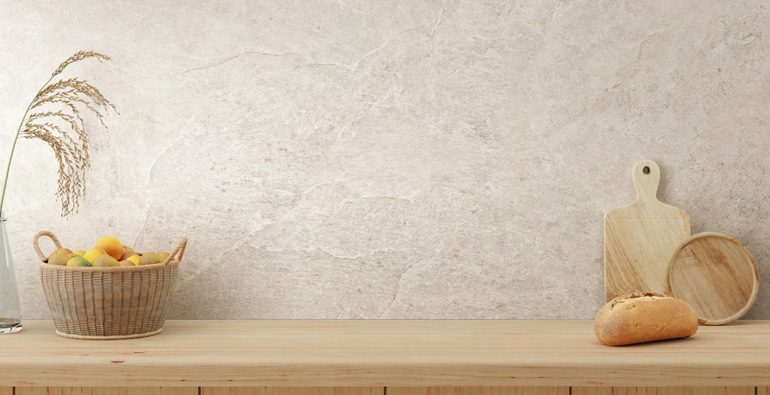
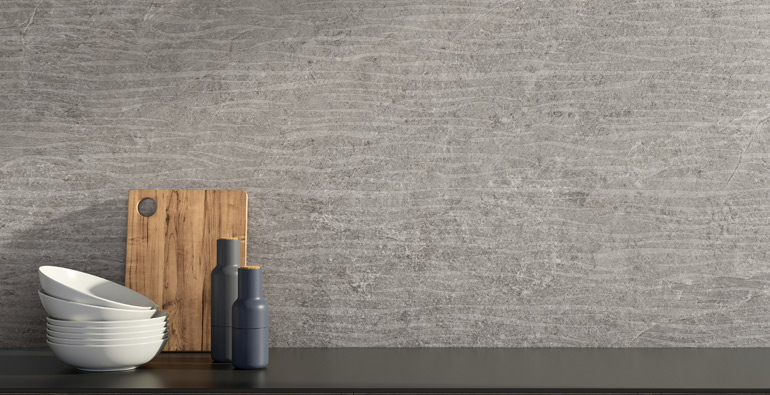
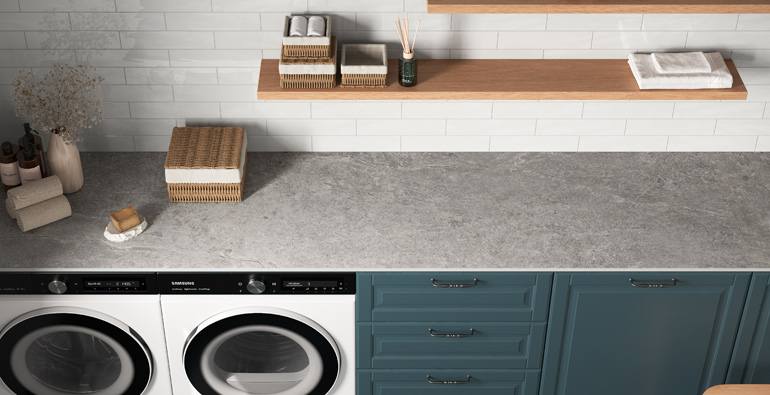
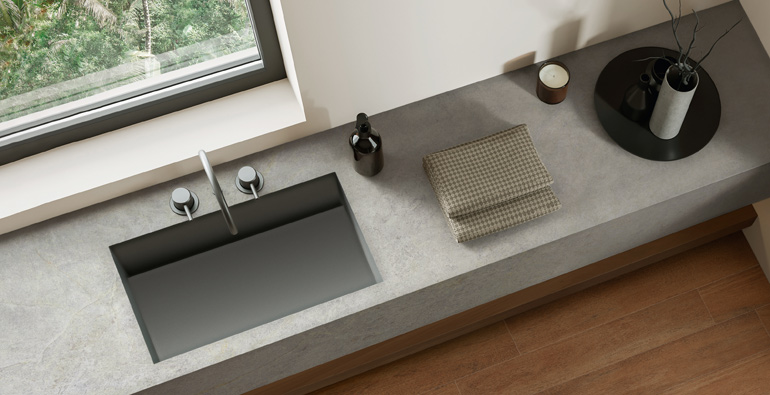
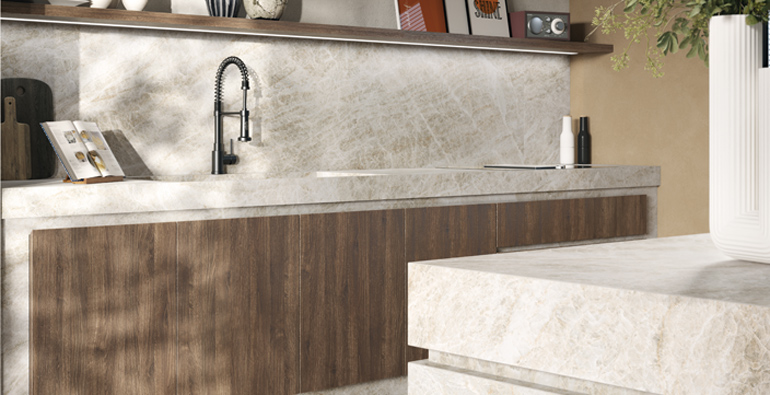
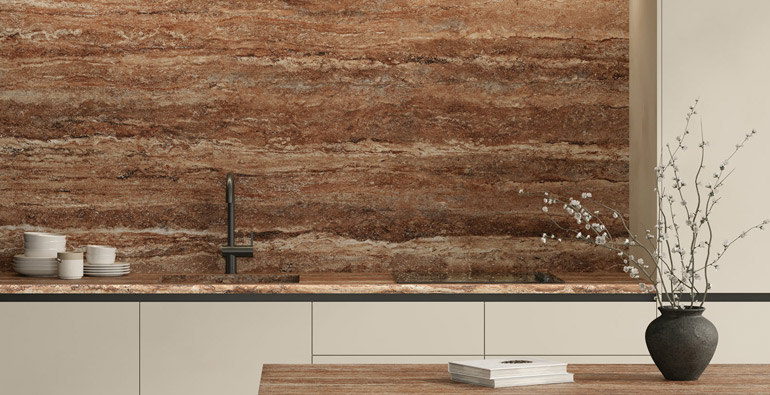
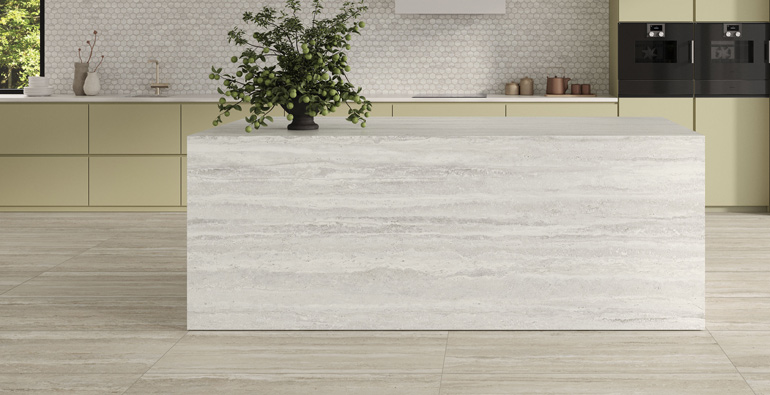
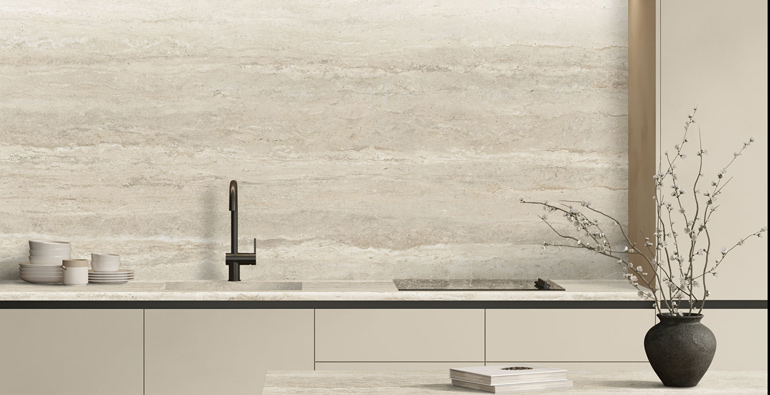
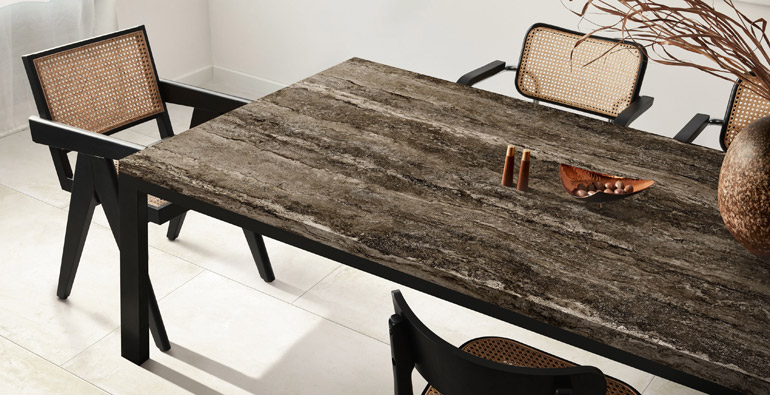
 Milestone Farmhouse Living 12mm porcelain slab countertop
Porcelain is highly resistant to stains, scratches, heat, fire, UV exposure and many household chemicals. It has extremely low water absorption, requires minimal routine maintenance and does not require periodic sealing. When properly fabricated and installed, porcelain can provide a service life of 50 years or more.
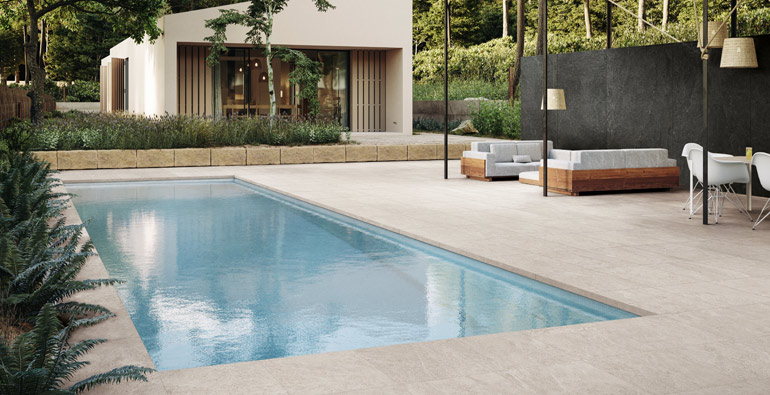
These characteristics make porcelain countertops suitable for kitchens, bathrooms, bars and other interior applications, while their resistance to sunlight and weather also makes porcelain particularly attractive for outdoor kitchens and entertaining spaces.
What Is a Porcelain Countertop?
Porcelain countertops are fabricated from large-format porcelain slabs rather than conventional tile.
Porcelain is manufactured from refined natural raw materials that are formed under tremendous pressure and fired at extremely high temperatures. This manufacturing process creates a dense, hard surface with extremely low water absorption and excellent resistance to many of the conditions countertops encounter every day.
Large porcelain slabs allow countertops to be fabricated with far fewer joints than would be possible using conventional tile.
Many countertop porcelain slabs are approximately 12mm or 20mm thick, or slightly less than 1/2 inch to a 3/4 inch. Although considerably thinner than many traditional stone countertop materials, porcelain’s strength and performance characteristics allow these slabs to be fabricated into countertops when properly supported and installed.
Why Choose Porcelain Slab Countertops?
Countertops are among the most heavily used surfaces in a home, and different environments place different demands on the material.
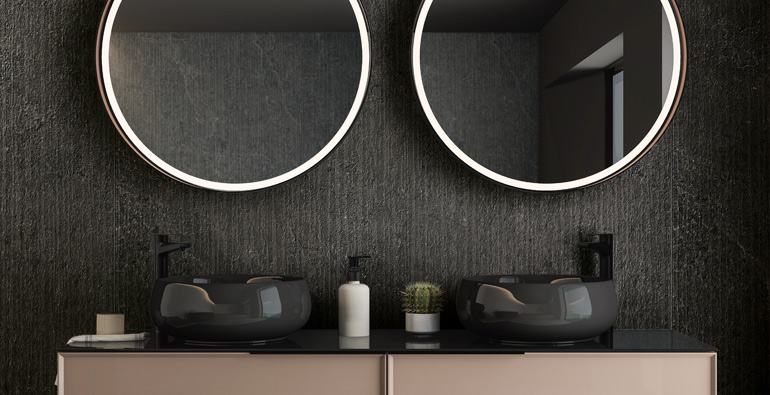
In kitchens, countertops are exposed to food, beverages, heat, cleaning products, sunlight and constant daily use. Bathroom countertops and vanity tops face a different set of demands, including frequent exposure to water, cosmetics, personal care products and household cleaners. In either environment, the surface needs to perform while remaining an important part of the room’s design. Outdoor kitchen countertops must withstand an even broader range of conditions, including sunlight, rain, temperature changes, food and cooking-related stains, and exposure to the elements.
Porcelain provides an unusual combination of durability, low water absorption, stain resistance, heat and fire resistance, UV resistance and minimal maintenance that makes it well suited for kitchen countertops, bathroom vanity tops and outdoor kitchen countertops.
Stain Resistance
Porcelain’s dense, extremely low-absorption surface makes it highly resistant to staining.
Wine, coffee, food and many other substances encountered in a kitchen are less likely to penetrate the material than they would with more porous countertop surfaces.
This also means porcelain does not typically require periodic sealing to maintain its stain resistance.
Scratch and Wear Resistance
Porcelain has a hard, durable surface that provides excellent resistance to scratching and everyday wear.
As with any finished countertop surface, reasonable care should still be taken. Cutting boards should be used for food preparation, both to protect the countertop and to avoid damaging or dulling knives.
Heat and Fire Resistance
Porcelain is manufactured at extremely high temperatures and is resistant to heat and fire.
This makes it particularly well suited for kitchens, where countertops are regularly located near cooktops, ranges and other heat-producing appliances. Porcelain’s heat resistance also makes certain porcelain slabs compatible with concealed induction cooking systems that allow portions of the countertop to function as a cooking surface.
It is also an important performance characteristic for outdoor kitchens incorporating grills, pizza ovens, fireplaces and fire features.
Appropriate protection and manufacturer recommendations should still be followed when dealing with extremely hot cookware or appliances.
UV and Fade Resistance
One of porcelain’s most important characteristics—particularly for outdoor use—is its resistance to UV exposure and fading.
Some countertop materials can be affected by prolonged exposure to direct sunlight. Porcelain is highly resistant to UV-related color change, making it an excellent material to consider for outdoor kitchens and interior spaces receiving significant natural light.
Extremely Low Water Absorption
Porcelain has extremely low water absorption.
This contributes to its resistance to stains and moisture and eliminates the need for the routine sealing required by some natural stone countertop materials.
Chemical Resistance
Porcelain provides excellent resistance to many common household chemicals and cleaning products.
As with any countertop material, the porcelain manufacturer’s cleaning and maintenance recommendations should be followed.
Long Service Life
A properly fabricated, installed and maintained porcelain surface can provide a service life of 50 years or more.
Just as importantly, porcelain can retain its appearance over that long service life. Its resistance to stains, fading, moisture and everyday wear means the material can continue to look much like it did when originally installed.
This combination of service life and appearance life is important when evaluating the long-term value of a countertop material.
The Design Possibilities of Porcelain Countertops
Performance is only part of porcelain’s appeal.
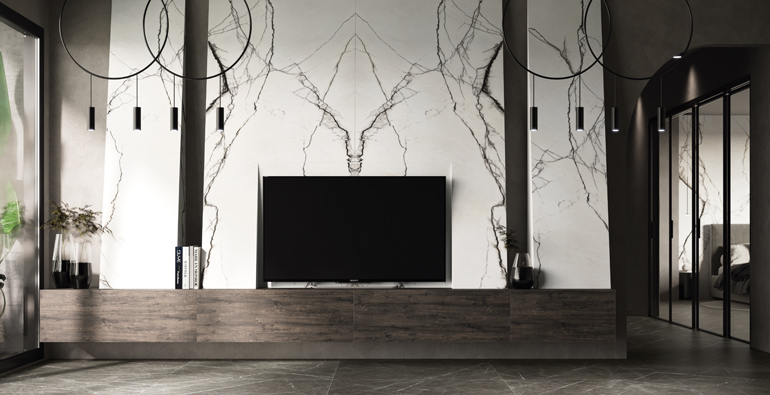
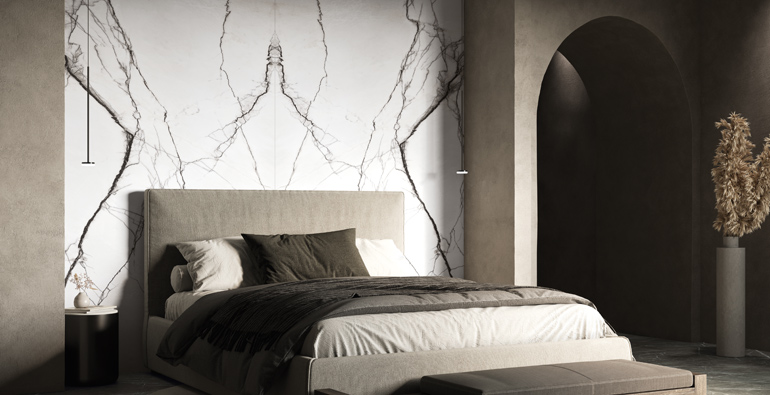
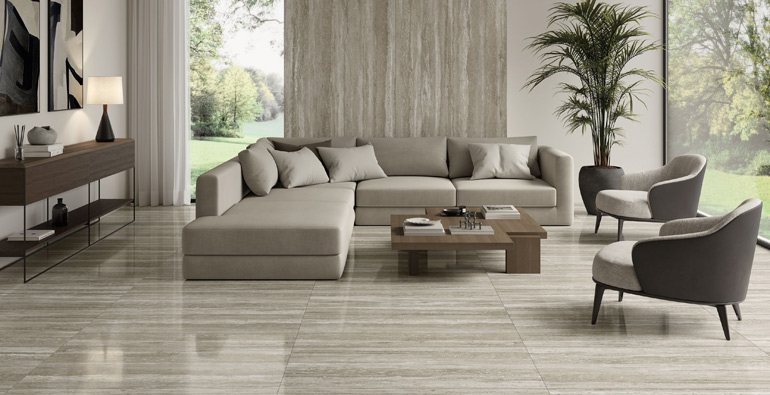
Modern porcelain manufacturing can create remarkably realistic interpretations of marble, natural stone, concrete and other materials.
This provides tremendous flexibility for homeowners and designers.

Marble-Look Porcelain
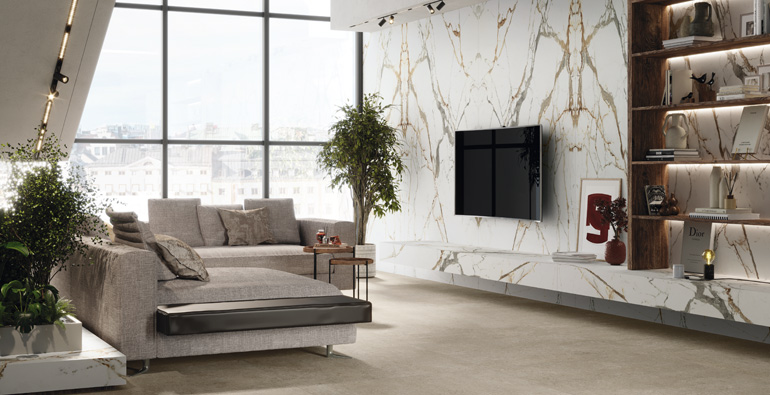
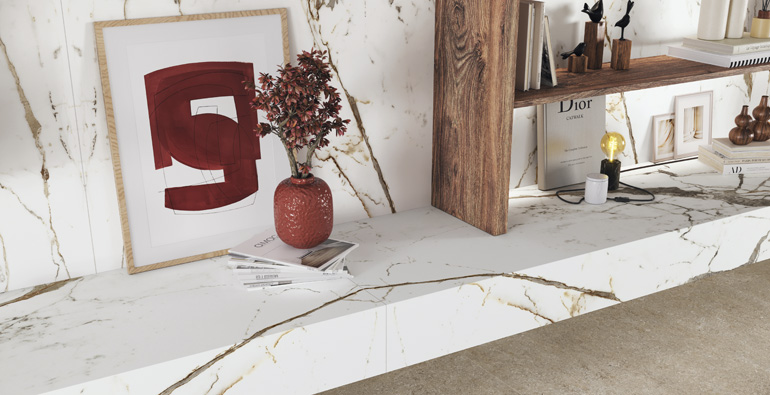
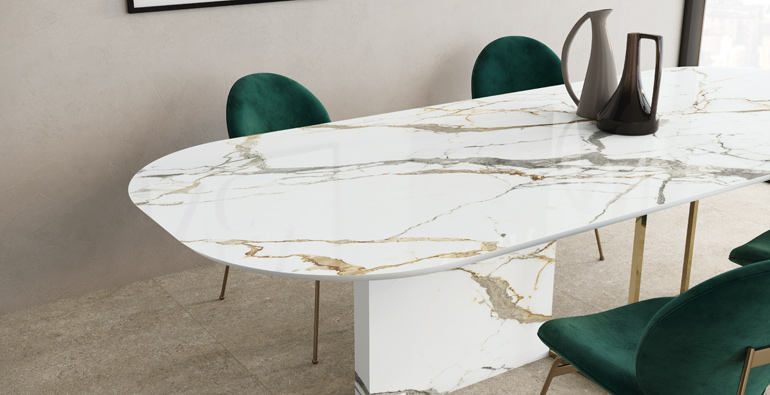
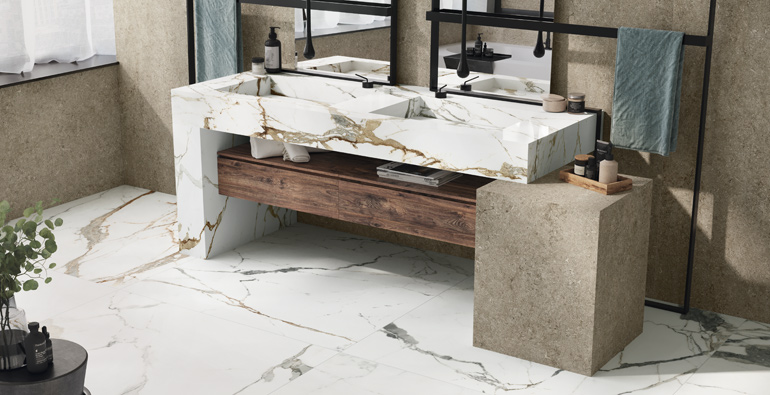
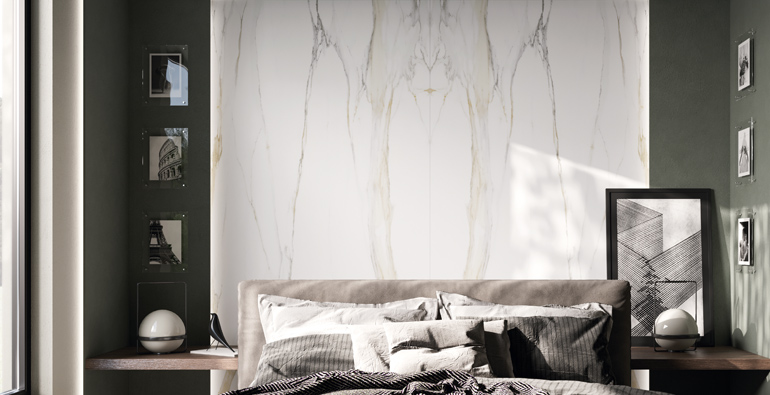
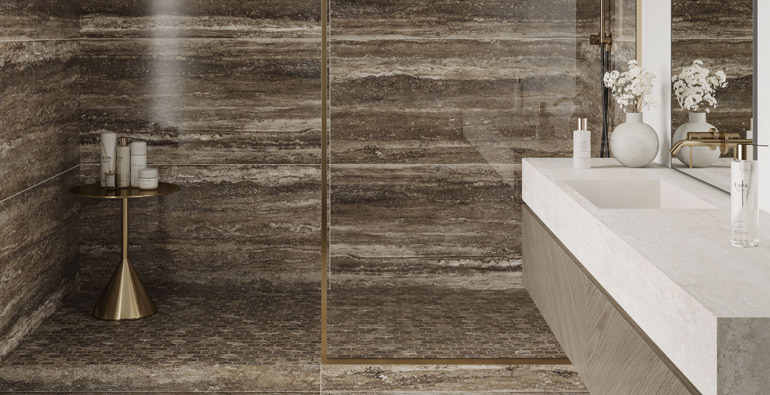
Porcelain can reproduce the dramatic veining and movement associated with marble without many of the maintenance concerns associated with certain natural marbles.
This can be particularly appealing in kitchens where the appearance of marble is desired but resistance to staining and everyday use is a priority.

Natural Stone Looks
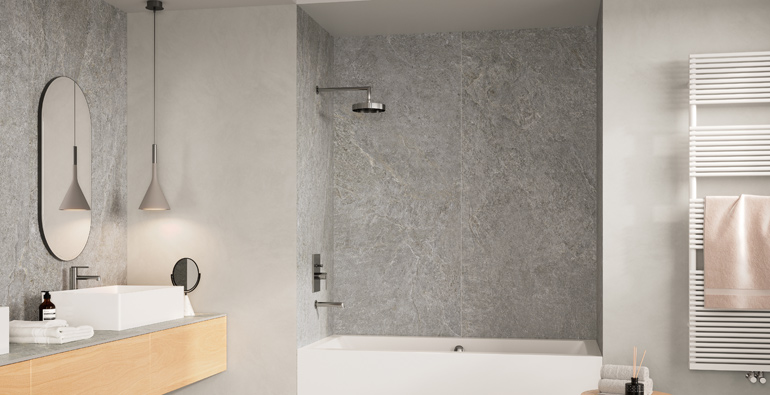
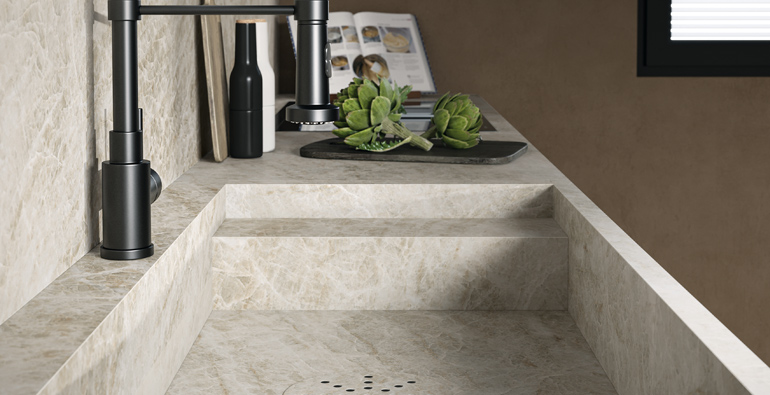
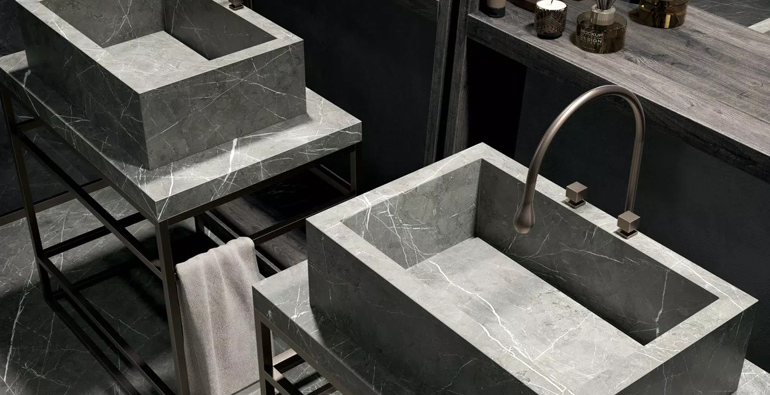
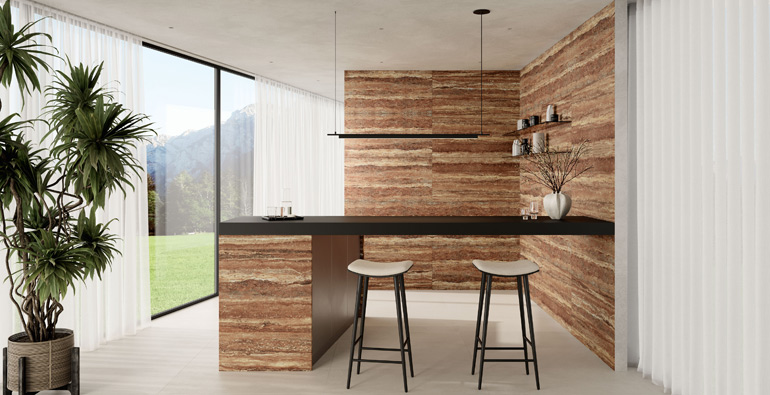
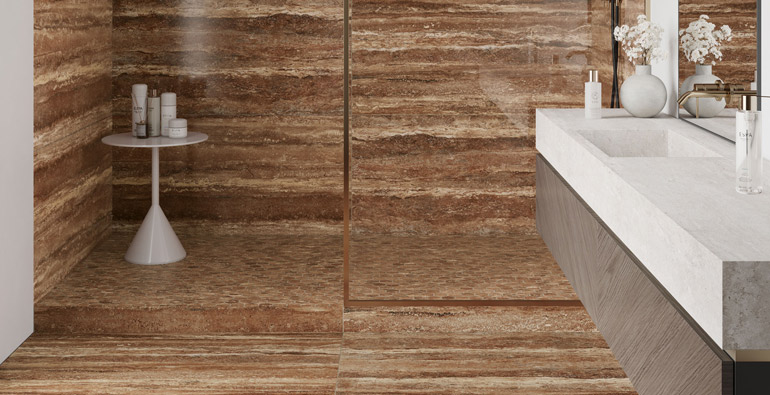
Porcelain slabs are available in designs inspired by numerous natural stones, providing the visual character of stone with the consistent performance characteristics of porcelain.

Concrete and Contemporary Designs
Concrete-inspired porcelain slabs can provide a clean, understated appearance well suited to contemporary kitchens, outdoor living spaces and modern architecture.
Consistent Design
Because porcelain is manufactured, colors and patterns can be intentionally developed to coordinate with other surfaces.
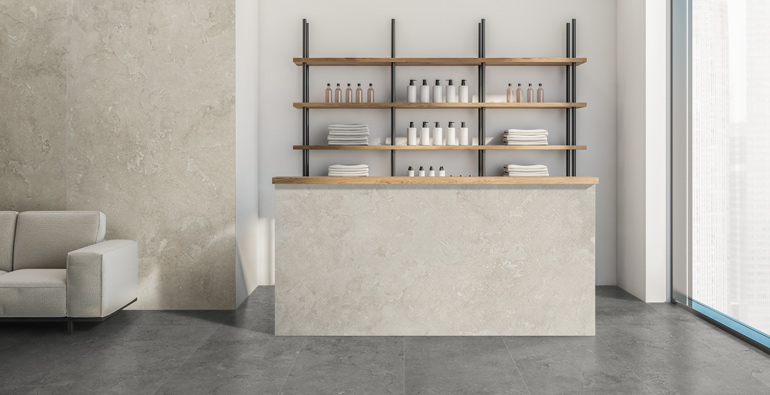
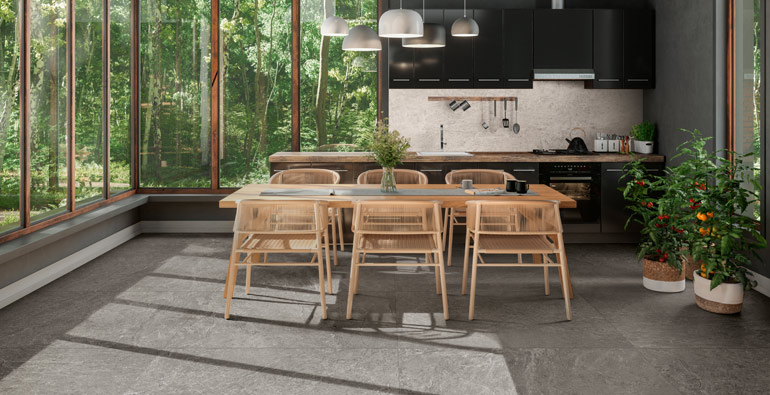
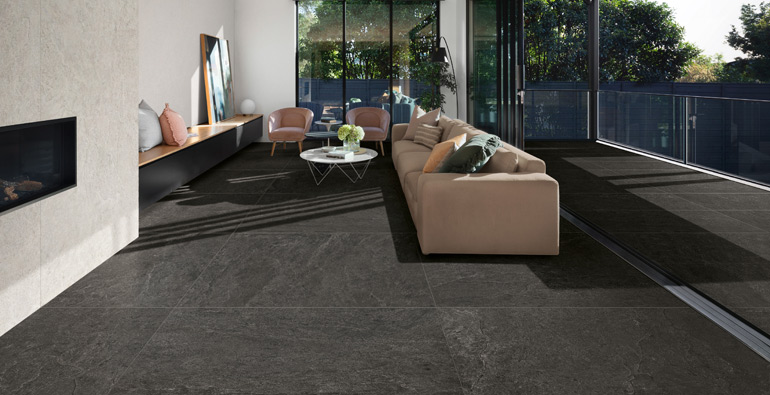
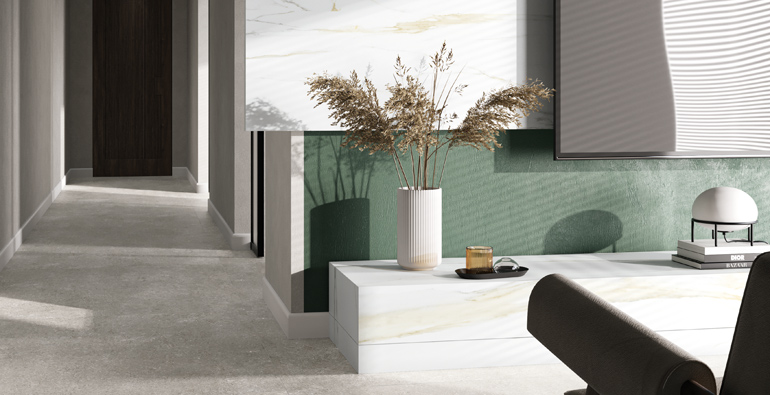
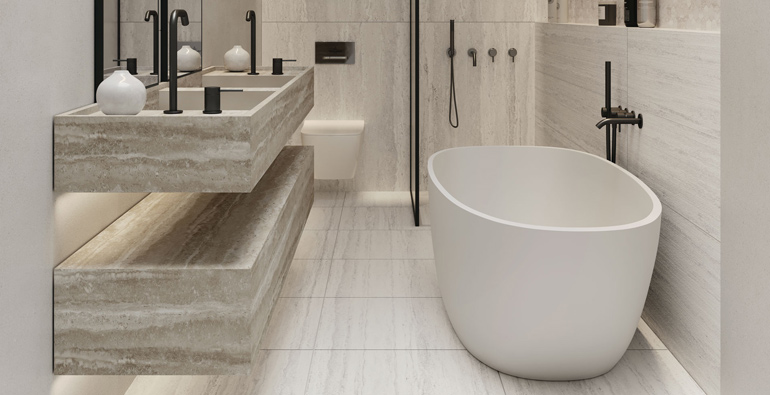
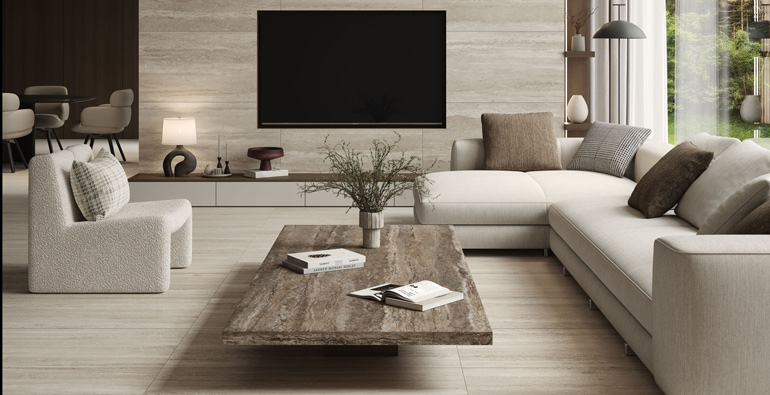
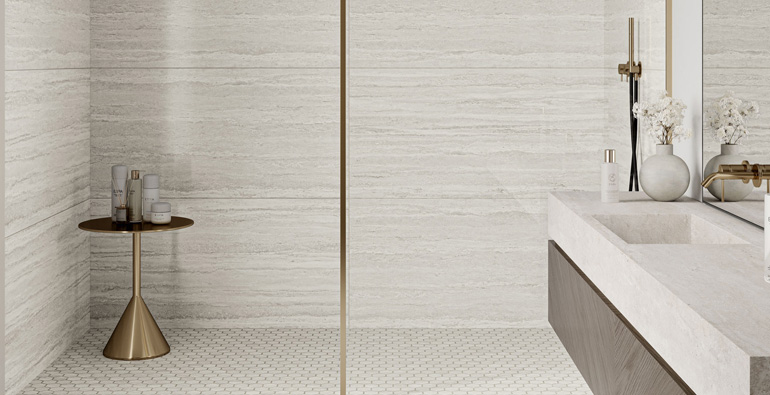
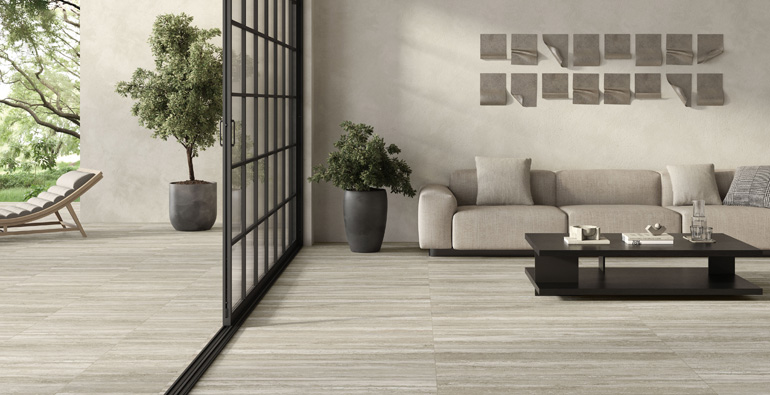
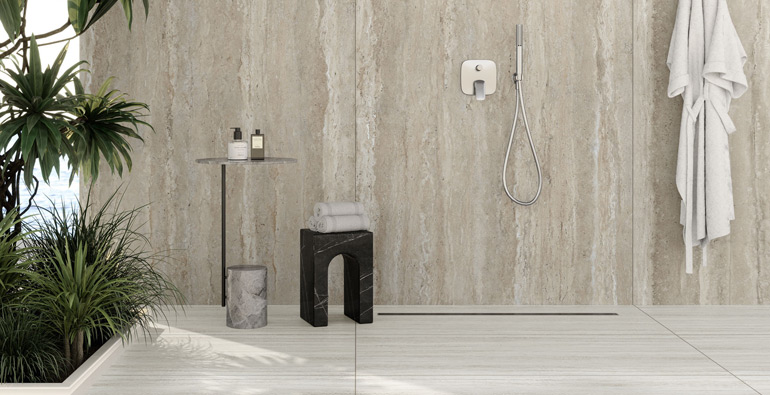
In some collections, coordinating porcelain products may be available for floors, walls or other applications, allowing designers to carry related colors and finishes throughout a space.
Porcelain Slab Thickness and Countertop Edges
One of the biggest differences between porcelain and many traditional countertop materials is thickness.
Porcelain countertop slabs are commonly available in approximately 12mm thicknesses (and in some cases 20mm). Rather than relying on the thickness of the material itself to create a substantial-looking countertop edge, fabricators can use different edge treatments to achieve the desired appearance.

Eased Edges
An eased edge follows the actual thickness of the porcelain slab and creates a thin, clean profile.
This can work particularly well with contemporary and minimalist designs where a visually lighter countertop is desired.

Mitered Edges
A mitered edge can create the appearance of a much thicker countertop.
The porcelain is carefully fabricated so the edge turns downward, allowing the countertop to appear substantially thicker than the slab itself.
Mitered edges can also be used to create waterfall ends and other architectural details.
The quality of the fabrication is especially important with porcelain. Experienced fabricators who understand large-format porcelain slabs and appropriate edge construction should be used.

Tapered Edge, Knife Edge or Shark Nose Edge
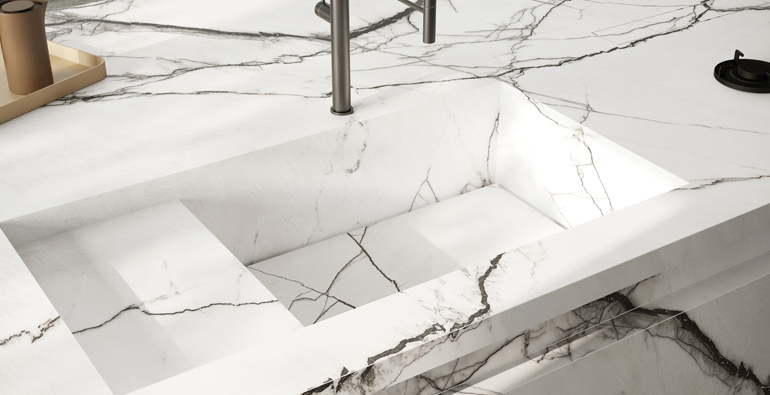
A knife edge, also referred to as a tapered edge or shark nose edge, creates a sleek profile by tapering the underside of the countertop back toward the cabinetry. This makes the exposed edge appear exceptionally thin while maintaining the strength and support of the countertop behind it.
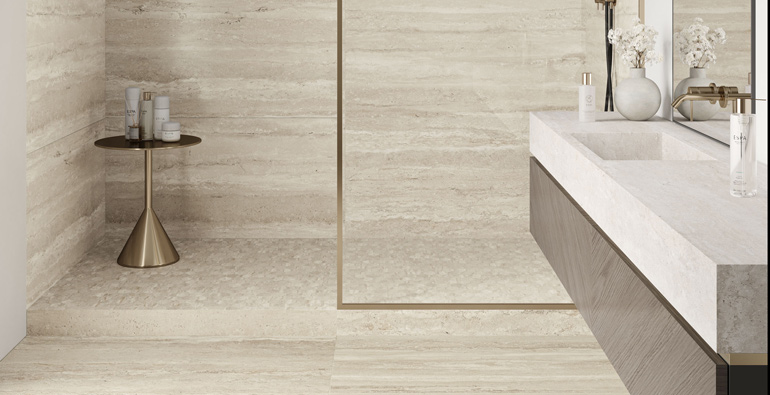
The result is a clean, minimalist appearance that works particularly well with porcelain slabs and contemporary kitchen designs. It can be especially striking on kitchen islands, countertops and bathroom vanity tops where the thin profile becomes an intentional part of the design.
Precise fabrication is important to create a clean, consistent taper and finished edge.
Where Can Porcelain Countertops Be Used?
Porcelain countertops can be considered for many residential and commercial applications, including:
- Kitchen countertops
- Kitchen islands
- Bathroom vanities
- Bar tops
- Outdoor kitchens
- Outdoor bars and entertaining areas
- Reception desks
- Hospitality stations
- Commercial counters and work surfaces
The appropriate slab, support system, fabrication method and installation should always be selected for the specific application.
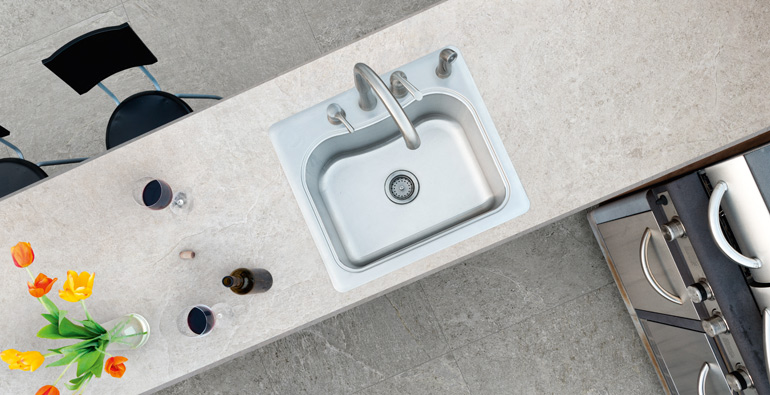
 Milestone Ecostone Cross-Cut Fossil porcelain countertop
Porcelain’s extremely low water absorption, UV resistance, stain resistance, heat and fire resistance and minimal maintenance requirements make it particularly well suited for these conditions when the product and installation are appropriate for exterior use.
Design is another advantage.
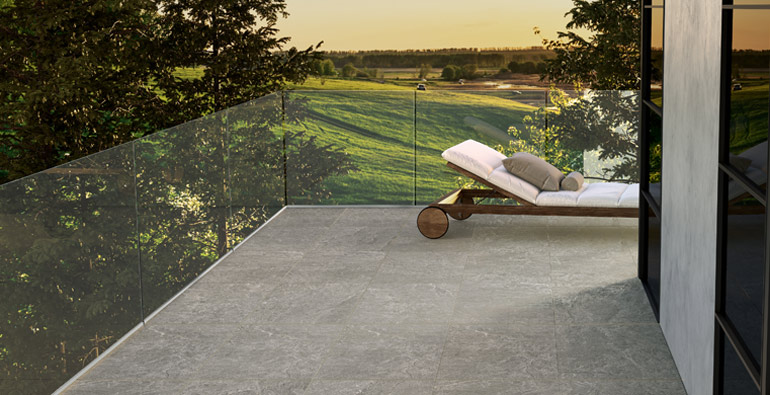
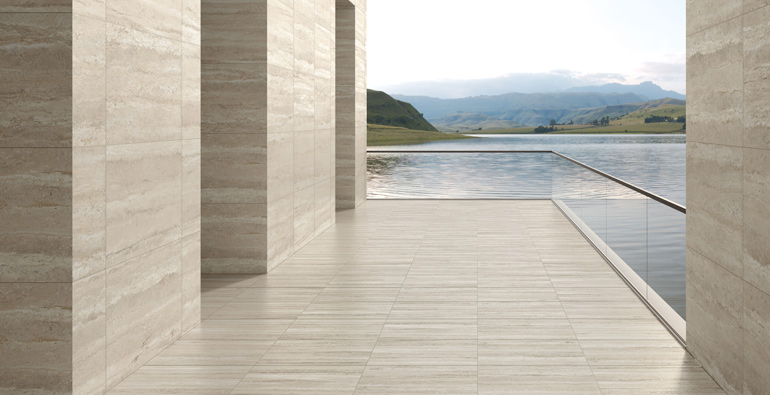
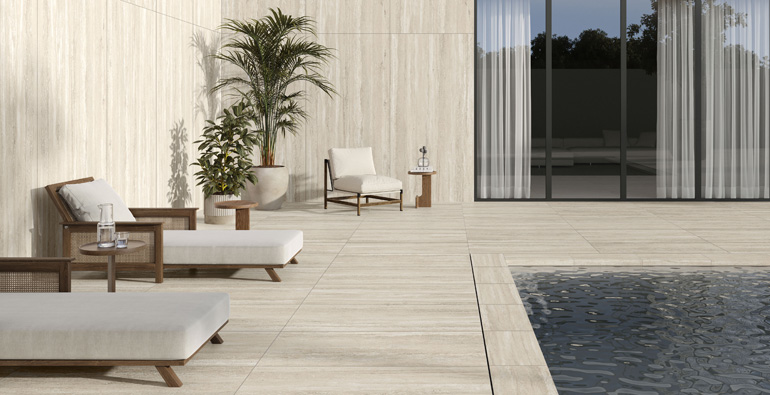
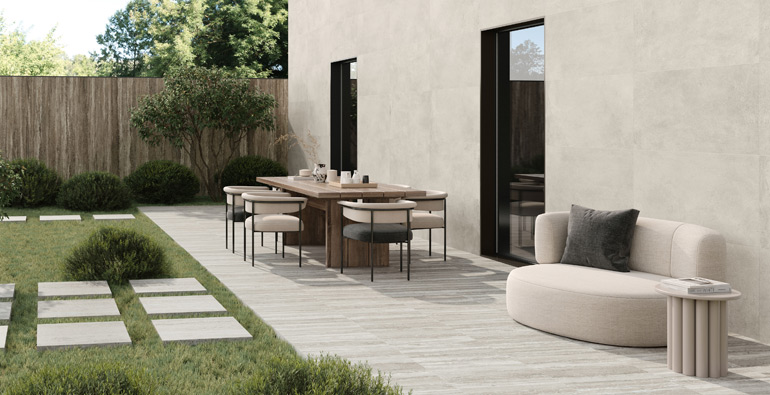
Porcelain countertops can coordinate with 2cm porcelain pavers used for the surrounding patio or outdoor kitchen floor. Porcelain panels can also be incorporated into backsplashes, walls and other architectural surfaces.
This allows porcelain to become part of a complete outdoor environment rather than simply the countertop material.
Explore our Outdoor Living with Porcelain Tile Guide to learn more about using porcelain for patios, outdoor kitchens, walls and other exterior applications.
Pro Tip: If installing porcelain countertops outdoors with mitered edges, the fabricator should use an epoxy adhesive appropriate for exterior installations, because some adhesives can yellow with sunlight exposure.
Porcelain Countertops vs. Quartz
Quartz countertops are widely used because they provide consistent design, durability and relatively simple maintenance.
Porcelain and quartz share several advantages, but there are important differences.
Porcelain provides excellent heat, fire and UV resistance. Its UV resistance is particularly important for outdoor applications because many engineered quartz products are not recommended for prolonged exterior exposure.
Quartz is generally thicker and may be more familiar to fabricators and installers. Its edges can also be less vulnerable to impact than thin porcelain edges depending on the design and fabrication.
For indoor kitchens, either material may be appropriate depending on the desired appearance, performance priorities and budget. For outdoor applications, porcelain’s UV and weather resistance can provide an important advantage.
Porcelain Countertops vs. Granite
Granite is a natural stone with genuine variation and a long history of use as a countertop material.
It provides excellent durability and heat resistance and, when properly selected and maintained, can last for decades.
Porcelain offers a different combination of advantages.
It has extremely low water absorption, does not generally require periodic sealing and provides highly consistent resistance to staining and UV exposure. Porcelain can also reproduce stone appearances that may otherwise be difficult or expensive to obtain naturally.
Note that not all granites can be used in an outdoor setting but all 12mm porcelain slabs can.
Granite provides the authenticity and uniqueness of natural stone, while porcelain provides greater predictability in appearance and maintenance.
The best choice depends on whether the priority is natural variation or the performance and design consistency of a manufactured surface.
Porcelain Countertops vs. Marble
Natural marble provides a distinctive appearance that has been valued in architecture and design for centuries.
It is also relatively porous and can be susceptible to staining, scratching and etching from acidic substances.
Porcelain can reproduce many natural marbles while providing substantially greater resistance to stains, chemicals and everyday kitchen use as well as avoid any blemishes that might be present in the real stone.
For someone who wants genuine natural marble and accepts its characteristics and maintenance requirements, marble may still be the preferred choice.
For homeowners who primarily want the appearance of marble combined with easier maintenance and greater resistance to everyday use, porcelain can be an attractive alternative.
Porcelain Countertops vs. Other Sintered and Manufactured Surfaces
Porcelain is one of several high-performance manufactured surfaces available for countertops.
Different products use different raw materials, manufacturing processes, thicknesses and surface technologies. Although they may appear similar, they should not automatically be assumed to have identical performance characteristics.
Product-specific technical information should be considered when comparing porcelain with other manufactured slab materials.
Porcelain Countertops: Pros and Cons
The primary advantages of porcelain countertops are their stain resistance, scratch and wear resistance, heat and fire resistance, UV stability, extremely low water absorption, minimal maintenance and broad design possibilities. The primary limitations involve fabrication complexity, edge vulnerability, repairability and the availability of fabricators experienced with large-format porcelain slabs.
Porcelain offers significant advantages, but it is important to understand its limitations.
Fabrication Requires Experience
Porcelain is extremely hard but relatively thin compared with many traditional countertop materials.
Cutting, transporting and fabricating large porcelain slabs requires specialized equipment, proper handling and experience that may take more time than natural stone slabs.
Not every stone fabricator works extensively with porcelain, so choosing a fabricator familiar with porcelain slab fabrication is important.
Edges Can Be Vulnerable to Impact
The broad surface of porcelain is extremely durable, but exposed edges can be more susceptible to chipping from a hard impact.
One area that deserves particular attention is the leading edge of a sink cutout. This edge can be exposed to repeated impacts from heavy pots, pans and other cookware as they are placed into or removed from the sink.
Proper edge design, fabrication, handling and installation help reduce this risk.
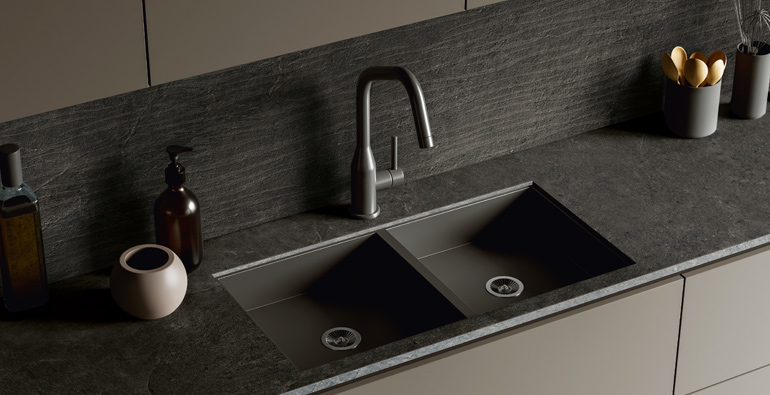
Pro Design Tip: The leading edge of a sink cutout is an area that is most vulnerable to impact damage on both natural stone and porcelain countertops. Heavy pots and pans can strike this exposed edge when being placed into or cleaned in the sink. Consider using a farmhouse, apron-front or drop-in sink, which eliminates the countertop edge across the front of the sink and therefore removes this common point of impact.
Repairs Can Be Difficult
Significant chips or damage can be more difficult to repair invisibly than with some other countertop materials. However, as technology in this area improves, so do the repair methods so this disadvantage is becoming less and less a disadvantage as new products are developed.
Pattern May Not Continue Through the Slab
Depending on the porcelain product, the design visible on the surface may not extend completely through the body of the slab.
This can affect how certain exposed edges appear and is one reason edge design and fabrication deserve careful consideration.
Fewer Fabricators May Be Available
Porcelain slab fabrication is becoming increasingly common, but experienced porcelain fabricators may not be as widely available as fabricators working with granite or quartz.
How Much Do Porcelain Countertops Cost?
The total cost of a porcelain countertop depends on several factors:
- Porcelain slab selection
- Amount of material required
- Project dimensions
- Number and complexity of cutouts
- Edge treatment
- Eased versus mitered edges
- Waterfall ends
- Fabrication complexity
- Transportation and handling
- Installation requirements
- Local fabrication and labor costs
A straightforward countertop with an eased edge can have a very different fabrication cost from a kitchen island with a thick mitered edge, waterfall ends and multiple cutouts.
In the Mid-Atlantic region, depending on the geographic area, complexity of the fabrication and installation, prices to include materials, fabrication, assembly and installation can range from $90/sf to $185/sf. Your local stone and porcelain fabricator will be able to provide you with a quote for material, fabrication, assembly and installation.
Consider the Lifetime Cost of a Countertop
As with outdoor paving materials, the purchase price is only one part of the cost of owning a countertop.
Porcelain’s potential 50+ year service life, minimal maintenance, resistance to staining and lack of periodic sealing requirements can reduce ongoing maintenance costs.
When comparing countertop materials, consider:
- Initial material cost
- Fabrication and installation
- Periodic sealing
- Routine maintenance
- Resistance to stains and fading
- Potential repair requirements
- Expected service life
- How the surface is likely to look after decades of use
A countertop that performs for decades while retaining its appearance, like porcelain does, can provide a very different long-term value than the initial installed price alone suggests.
Does Porcelain Need to Be Sealed?
Porcelain countertops generally do not require periodic sealing.
The material’s extremely low water absorption means it does not rely on a sealer to protect the surface from moisture and stains in the way some porous natural stones do.
This is one of porcelain’s primary long-term maintenance advantages.
Specific care recommendations from the porcelain manufacturer and fabricator should always be followed.
How Do You Clean Porcelain Countertops?
Routine porcelain countertop maintenance is generally straightforward.
For everyday cleaning, water and a mild detergent or household cleaner is typically sufficient. Spills should still be cleaned in a reasonable amount of time, particularly around seams, edges and adjacent materials.
Abrasive or specialized cleaners should only be used when appropriate for the particular porcelain finish and according to the manufacturer’s recommendations.
Choosing the Right Porcelain Countertop
Selecting a porcelain countertop should involve more than choosing a color from a small sample.
Large-format slab designs can contain significant movement and variation, particularly marble- and stone-inspired patterns. Whenever possible, viewing the full slab or a large representation of the design can provide a much better understanding of how the finished countertop will appear.
Consider:
- Overall color and pattern
- Finish and texture
- Slab dimensions
- Thickness
- Edge design
- Indoor or outdoor application
- Cabinet and support requirements
- Sink and appliance cutouts
- Fabricator experience
- Manufacturer recommendations
For outdoor applications, confirm that the selected product and complete installation are appropriate for exterior exposure.
See Porcelain Countertops in Person
Porcelain slabs are difficult to fully appreciate from a small sample or computer screen. Their scale, veining, surface finish and overall design become much clearer when viewed in person.
Conestoga Tile offers porcelain slab options for kitchens, bathrooms, outdoor kitchens and other countertop applications. Our showroom teams can help homeowners, designers, architects, remodelers and contractors explore available designs and understand the characteristics of porcelain as a countertop material.
We can also help connect customers with experienced fabricators who understand the specialized requirements of porcelain slab fabrication and installation.
Whether you’re considering porcelain for an indoor kitchen, bathroom, outdoor kitchen or another surface, visit a Conestoga Tile showroom or contact us for help exploring porcelain countertop options for your project.